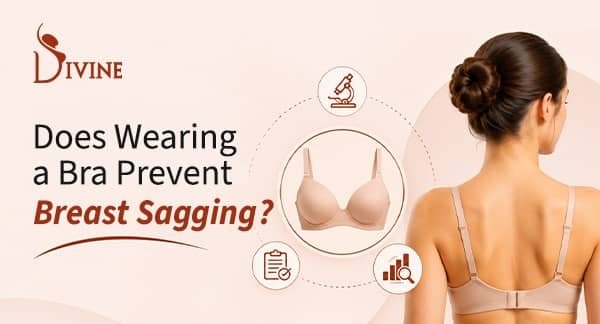
Can Wearing a Bra Prevent Breast Sagging?
“I didn’t wear a bra regularly. Is that why my breasts are sagging?”
It is a common concern among women, especially those who notice changes in their breast shape after pregnancy, weight loss or with age.
But here is something important to understand: not wearing a bra does not automatically cause breast sagging. And wearing one regularly does not guarantee that your breasts will stay firm forever.
So, what actually causes breasts to sag? Can anything be done to improve their shape? And when should you consider a breast lift?
Let’s understand.
Does Not Wearing a Bra Cause Breast Sagging?
No strong scientific evidence shows that not wearing a bra causes breast sagging or that wearing one prevents it.
A bra provides support, helps reduce movement and can make larger breasts feel more comfortable. But it does not permanently hold breast tissue in position or prevent the natural changes that happen over time.
Some women feel more comfortable wearing a bra throughout the day, while others prefer not to. Both choices are fine.
Breast shape is influenced by several factors, including age, genetics, breast size, skin quality, pregnancy and weight changes.
So, if you are blaming yourself for not wearing a bra regularly, there is no reason to feel guilty.
What Actually Causes Breasts to Sag?
Breast sagging is medically known as breast ptosis. It happens when the breast tissue and nipple gradually move lower in relation to the breast fold.
There is no single reason behind it. Several factors can contribute.
| Cause | How it affects breast shape |
|---|---|
| Ageing | Skin gradually loses elasticity, which can affect breast firmness and position |
| Pregnancy | Breast volume changes during pregnancy, which can stretch the skin and supporting tissues |
| Breastfeeding | Changes in breast volume around pregnancy and after weaning may contribute to changes in shape |
| Weight loss | A reduction in breast fat can leave loose skin and less fullness |
| Larger breasts | Heavier breasts may place more strain on the skin and supporting tissues |
| Genetics | Family traits can influence breast size, skin elasticity and natural shape |
| Skin quality | Stretch marks and reduced skin elasticity may affect how well the skin supports the breast |
One important point: pregnancy-related breast changes are not caused by breastfeeding alone. Hormonal changes and changes in breast volume during pregnancy also play a role.
Every woman’s body is different, so breast sagging can happen at different ages and for different reasons.
Can You Improve Sagging Breasts Without Surgery?
This is one of the most common questions women ask.
The answer depends on how much sagging is present.
A well-fitted bra can improve the appearance of the breasts while you are wearing it. Exercise can strengthen the chest muscles underneath the breasts. Maintaining a stable weight and looking after your skin can also support general health.
However, these measures cannot remove significant excess breast skin or reposition breast tissue and nipples that have dropped.
For women who want a noticeable improvement in breast position and shape, breast lift surgery may be an option.
A breast lift is also called mastopexy. It involves removing excess skin and reshaping the breast tissue to improve its position and contour.
Not every woman with mild sagging needs surgery. The decision depends on your concerns, breast shape and expectations.
What Can a Breast Lift Actually Achieve?
A breast lift is designed to improve breast shape and position.
During surgery, the surgeon removes excess skin, reshapes the existing breast tissue and repositions the nipple-areola complex when needed.
The aim is to create a more balanced breast shape with improved position and contour.
A breast lift does not necessarily increase breast size. In fact, some women feel that their breasts look slightly smaller after the procedure because the tissue is reshaped and excess skin is removed.
It is also important to understand that a breast lift cannot stop ageing or completely prevent future sagging. Pregnancy, weight changes, skin quality and natural ageing can influence the results over time.
After surgery, your surgeon will recommend a supportive bra during the initial recovery period. Once healing is complete, wearing a bra is generally a matter of personal comfort and activity.
Which Breast Surgery Option Is Right for You?
Not every woman with sagging breasts needs the same procedure. The right approach depends on breast volume, skin quality, the amount of excess skin and the position of the nipples.
Here are some common situations.
| Your concern | Procedure that may be considered |
|---|---|
| Breasts have enough volume but have started sagging | Breast lift without implants |
| Breasts have lost fullness and are sagging | Breast lift with implants in selected cases |
| Breasts are very large, heavy and sagging | Breast reduction with a lift |
| Breasts are small but have good shape and no significant sagging | Breast augmentation, if additional volume is desired |
Breast lift without implants
If you already have enough breast volume but are unhappy with the position or shape, a breast lift alone may be suitable.
The surgeon reshapes your existing tissue and removes excess skin. An implant is not automatically required.
Breast lift with implants
Some women have both sagging and a loss of breast fullness, particularly in the upper part of the breast.
In selected cases, a breast lift can be combined with implants to improve position and add volume.
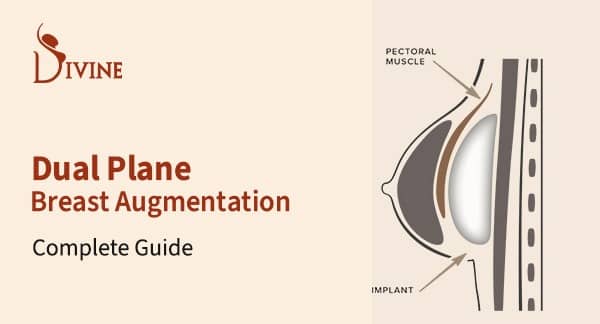
Implant placement, including a dual plane approach, depends on your anatomy and surgical plan. It is a separate decision from the breast lift technique itself.
Breast reduction with a lift
Women with very large, heavy breasts may experience back or shoulder discomfort, difficulty exercising and problems finding comfortable clothing.
Breast reduction removes excess breast tissue, fat and skin while reshaping and lifting the remaining breast.
The procedure can improve both breast proportions and physical comfort.
What about liposuction?
Liposuction may be used to reduce breast volume in selected women, particularly when there is a suitable amount of fatty tissue.
However, liposuction alone does not remove significant excess skin or reposition a low nipple. If considerable sagging is present, a breast lift or reduction technique may be more appropriate.
Recovery is almost the same for both surgeries.
Book Your Free Consultation Now
Breast Lift Scars: What Should You Expect?
Scars are a normal part of breast lift surgery. The pattern depends on how much skin needs to be removed and how much the breast needs to be reshaped.
Your surgeon will choose a technique based on your breast anatomy and the amount of sagging.
The three commonly discussed scar patterns are:
| Scar pattern | Where the scar is located | When it may be considered |
|---|---|---|
| Periareolar | Around the edge of the areola | Selected cases with mild sagging |
| Vertical or lollipop | Around the areola and vertically down towards the breast fold | Many cases of moderate sagging |
| Anchor or inverted-T | Around the areola, vertically down and along the breast fold | More significant sagging or excess skin |
Vertical or lollipop scar
This technique involves a scar around the areola and a vertical line extending down towards the breast fold.
It may be suitable when a moderate amount of skin needs to be removed and reshaping is required.
Anchor or inverted-T scar
This technique includes an additional horizontal incision along the natural breast fold.
It allows the surgeon to remove more excess skin and reshape larger or more significantly sagging breasts.
The extra incision may be necessary to achieve a suitable shape. It is not necessarily a sign of a more complicated or poorly performed operation.
What is a free nipple graft?
In selected cases of very large breast reduction, the surgeon may consider a free nipple graft.
In this technique, the nipple-areola complex is temporarily detached and grafted into a new position. It may be considered when maintaining its original blood supply would be difficult.
This technique can result in loss of normal nipple sensation and usually prevents breastfeeding from the operated breast.
It is not required for most breast lifts or reductions. Your surgeon will explain whether it is appropriate and discuss the implications before surgery.
Do breast lift scars disappear?
No. Scars generally do not disappear completely, but they often become flatter and lighter as healing progresses.
Their appearance depends on skin type, genetics, surgical technique, wound healing and aftercare.
Your surgeon will explain how to care for your scars and when scar treatments may be appropriate.
What Is an Internal Bra in Breast Surgery?
You may have heard the term internal bra when researching breast lift or breast reduction surgery.
An internal bra is not an ordinary bra. It refers to surgical techniques that provide additional support to the breast tissue from within.
Depending on the technique, the surgeon may use the patient’s own tissue or a specialised surgical mesh to support the reshaped breast.
Not every patient needs an internal bra. The decision depends on breast anatomy, tissue quality, the amount of sagging and the surgeon’s assessment.
It is important to understand that additional internal support does not guarantee that the breasts will never sag again. Natural ageing, gravity and weight changes can still affect breast shape over time.
If an internal bra is being considered, ask your surgeon what material or technique will be used, why it is recommended and what its potential benefits and risks are.
Factors That Can Affect Breast Lift Results
The surgical technique is important, but your health, lifestyle and recovery also play a role.
Here are some factors worth discussing before surgery.
Smoking and nicotine use
Smoking and nicotine can reduce blood flow and interfere with wound healing. They may increase the risk of complications, including delayed healing and skin or nipple blood supply problems.
Tell your surgeon about all nicotine use, including cigarettes, vaping, hookah and nicotine replacement products.
You may be asked to stop well before surgery and remain nicotine-free during recovery. Follow the specific instructions provided by your surgeon.
Pregnancy and breastfeeding
If you are planning breast surgery, it is generally preferable to wait until you have finished breastfeeding and your breast volume has stabilised.
The appropriate waiting period varies between women. Your surgeon will assess your recovery from breastfeeding, milk production and breast changes before recommending surgery.
Future pregnancy can also affect the results of a breast lift because breast volume and skin can change again.
Weight changes
Significant weight fluctuations can affect breast volume and skin elasticity.
Maintaining a relatively stable weight before and after surgery may help preserve the result.
Choosing the right surgeon
Breast lift surgery involves decisions about skin removal, tissue reshaping, nipple position, blood supply and scar placement.
Choose a qualified plastic surgeon who can explain the available techniques, expected results, possible complications and limitations.
Do not hesitate to ask questions about the procedure and the surgeon’s experience with similar cases.
Breast Lift Recovery: What to Expect
Recovery is different for every patient. It depends on the surgical technique, the extent of the procedure and individual healing.
Here is a general idea of what recovery may involve.
| Recovery stage | What you may experience |
|---|---|
| First few days | Soreness, swelling and bruising are common |
| First 1–2 weeks | Discomfort generally starts improving; some patients may return to desk work when cleared |
| Following weeks | Swelling gradually reduces and daily activities can be increased as advised |
| Over several months | Breast shape continues to settle and scars gradually mature |
| Longer term | The final appearance becomes clearer as healing progresses |
Your surgeon may recommend a supportive surgical bra during the initial recovery period.
Avoid heavy lifting, strenuous exercise and activities that put pressure on the chest until your surgeon gives you permission.
Follow-up visits are important because they allow the surgeon to check wound healing, breast shape and any concerns.
What are the possible risks of breast lift surgery?
Like any operation, a breast lift has potential risks. These may include:
- Visible or widened scars.
- Changes in nipple or breast sensation.
- Differences in breast size or shape.
- Infection or bleeding.
- Delayed wound healing.
- Changes in nipple blood supply.
- Difficulty breastfeeding in some cases.
- The possibility of revision surgery.
The likelihood of complications varies between patients. Your surgeon should discuss the risks that are particularly relevant to your medical history and planned procedure before you make a decision.
Frequently Asked Questions About Bras and Breast Sagging
1. Will my breasts sag more if I do not wear a bra at night?
No strong scientific evidence shows that sleeping without a bra causes breast sagging. Wearing a bra at night is generally a personal choice. You can decide based on your comfort and preference.
2. Does wearing a tight bra prevent breast sagging?
No. A tight bra does not prevent the natural changes that affect breast shape. An appropriately fitted bra can provide support and comfort, but it cannot permanently hold breast tissue in position.
3. Can breast exercises lift sagging breasts?
Exercise can strengthen the chest muscles underneath the breasts, which may improve the appearance of the chest area. However, it cannot remove excess breast skin or reposition sagging breast tissue.
4. Will breastfeeding make my breasts sag?
Breast changes are influenced by pregnancy, hormonal changes and changes in breast volume. Breastfeeding alone is not the only reason for sagging. Genetics, age and skin elasticity also play a role.
5. Can I get a breast lift without an implant?
Yes. If you have sufficient breast volume and mainly want to improve breast position and shape, a breast lift without implants may be suitable.
6. Will I have to wear a bra after a breast lift?
Your surgeon will usually recommend a supportive bra during the initial recovery period. Once healing is complete, wearing a bra is generally a matter of personal comfort and activity.
7. Can I breastfeed after a breast lift or reduction?
Some women can breastfeed after breast surgery, but the ability to do so may be affected by the technique used, changes to milk ducts and nerve supply, and individual healing. Discuss future pregnancy and breastfeeding plans with your surgeon before surgery.
8. Are breast lift scars permanent?
Yes, surgical scars are permanent, but their appearance generally improves over time. They may become flatter and lighter as healing progresses. The final appearance varies between individuals.
9. Does a breast lift last forever?
No. A breast lift can provide long-lasting improvement, but it cannot stop ageing or gravity. Pregnancy, significant weight changes and natural changes in skin elasticity can affect the results over time.
10. When is the right time to consider breast lift surgery?
You may consider discussing surgery when your weight is relatively stable, you have finished breastfeeding and you understand the possible benefits, risks and limitations. The right timing should be decided with your surgeon.
In Short: Can Wearing a Bra Prevent Breast Sagging?
No. Wearing a bra does not guarantee that your breasts will remain firm, and not wearing one does not automatically cause sagging.
Breast shape changes naturally over time. Ageing, pregnancy, weight fluctuations, genetics and skin elasticity can all contribute.
If sagging is affecting your comfort or how you feel about your breast shape, a breast lift may be one option to explore. Some women may benefit from a lift alone, while others may need a combination of breast reduction or augmentation.
The right approach depends on your breast anatomy, health, personal goals and expectations.
If you are considering breast surgery, speak with a qualified plastic surgeon. An individual assessment can help you understand which options are suitable for you.
Medical disclaimer: This article is for general educational purposes only and does not replace medical advice or an individual consultation. Breast surgery has potential risks and limitations. Suitability and treatment recommendations should be determined by a qualified plastic surgeon.